
Kutná Hora and Kingdom Come II
Kutná Hora and Kingdom Come II: A Medieval Metropolis in Game and Reality
Kutná Hora is one of the most important places in Czech history and a major inspiration for Kingdom Come: Deliverance II. Warhorse Studios chose to set the sequel in a town that played a crucial role in the economy of the Kingdom of Bohemia in the late Middle Ages. In 14. the 14th and 15th centuries, Kutná Hora was among the wealthiest cities in Europe. Thanks to vast silver deposits, the Italian Court (Vlašský dvůr) was established here, minting Prague groschen – a currency of continental significance.
Why Kutná Hora
In the Middle Ages, Kutná Hora was the center of silver mining and the place where Prague groschen were minted – a currency essential for financing the kingdom. The town became wealthy and turned into a hub that controlled the economy of the entire Bohemian Crown.
In the game, this manifests in several ways. You encounter the mint as a political power center, factions competing for control of the town, social divides between miners, craftsmen, and burghers, tensions and corruption. As a player, you perceive Kutná Hora as a place where history is “happening now” – not as a backdrop, but as a catalyst for events.
Kutná Hora Locations Featured in the Game
Here are several key locations from the game that you shouldn’t miss when visiting Kutná Hora in real life.
Italian Court (The Palace)
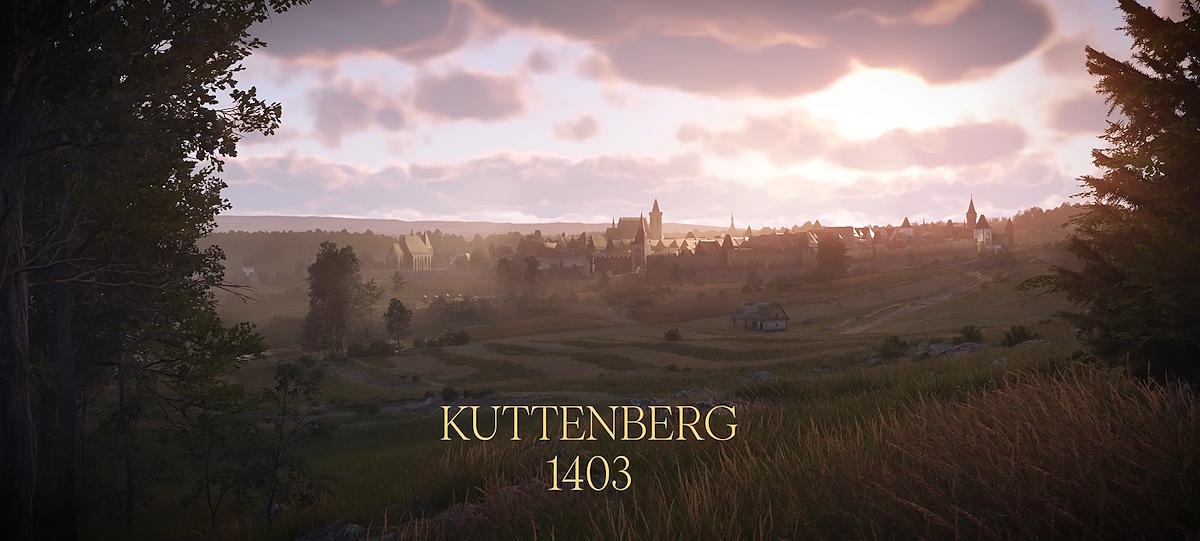
Kuttenberg is the most important location in the second part of Kingdom Come: Deliverance II. The game offers an impressive reconstruction of streets and town squares, filled with medieval atmosphere. You can observe the social classes of its inhabitants. Pay attention to the town architecture, façades, murals, or even the astronomical clock in the center. More: Italian Court
Church of St. Barbara
This iconic building is shown in the game while it is still under construction outside the town walls. You can see its surroundings, the original small church, and several adjacent buildings. It is fascinating to compare with the modern-day site. Today, the fully completed Gothic church is a UNESCO monument and one of the most striking examples of Czech Gothic architecture. More here: St. Barbara Church
Sedletz Monastery
A major religious site both in-game and in real history – the first Cistercian monastery on Czech territory. It lies outside Kutná Hora; in fact, the town later grew thanks to this monastery. Definitely visit it in person – right next to the monastery is the unique Sedlec Ossuary, one of Europe’s most remarkable memorial sites. More here: Sedlec Ossuary
Historic Center of Kuttenberg
Kuttenberg is the most important location in the second part of Kingdom Come: Deliverance II. The game offers an impressive reconstruction of streets and town squares, filled with medieval atmosphere. You can observe the social classes of its inhabitants. Pay attention to the town architecture, façades, murals, or even the astronomical clock in the center.
Henry meets numerous characters here and undertakes quests dealing with intrigue, power struggles, issues in the mint, political scheming, and conflicts between townspeople and miners. The game also captures scenes from everyday medieval life remarkably well.
Today, Kutná Hora’s historic center is a UNESCO-listed heritage zone, and the medieval spirit is still very much present.
Kutná Hora as a Living Game Guide
If you plan to visit the town because of Kingdom Come II, you can follow a route inspired by the game:
- Italian Court
- Historic town center and silver mines
- Church of St. Barbara (cathedral)
- Sedlec Monastery and Ossuary
About the Game
Kingdom Come: Deliverance is one of the most successful Czech video games both domestically and internationally. It does not romanticize the Middle Ages; instead, it portrays social reality, inequality, tension, and politics. It reveals the wealth of the town as well as its darker sides. Players get one of the most realistic depictions of a medieval city ever shown in a video game.
When you visit Kutná Hora, you can compare your in-game experience with the real environment. It is one of the few places where a player might say: “I’ve walked through this before – just in another century.”
Whether you’re a gamer, history enthusiast, or traveler, the combination of game and reality offers a rare opportunity to see the Middle Ages through both worlds.

